

 724-836-2600
WaterWise Summer Camp
The free WaterWise Summer Camp is a fun 10-day program designed to encourage environmental stewardship, build scientific knowledge, and introduce middle school students (grades 6–8) from Westmoreland and Fayette Counties to careers in conservation and environmental science.
The camp will be a combination of classroom instruction, hands-on investigations and experiences, and engineering challenges. Students will explore the science of healthy waterways while learning how human activities affect local streams, rivers, and wetlands.
Our partners on this project include Penn State 4-H, Rivers of Steel, Jacob’s Creek Watershed Association, and the Education and Technology Institute.
The camp will be held at 112 Commonwealth Drive, Lemont Furnace, PA from July 27-Aug 7, 2026 from 9am to 3pm. Lunch will be provided.
Students will learn about:
Water Systems
Students develop a foundation in watershed science, the water cycle, aquatic ecosystems, and water quality. Our campers will use scientific equipment to measure water quality indicators such as pH and temperature while learning how these factors impact aquatic life and human communities.
Human Impacts on Local Waterways
Field experiences take students to local streams and wetlands where they can conduct habitat assessments, collect macroinvertebrate samples, and investigate land-use impacts. Students will also examine the region’s industrial and mining history to better understand how past and present human activities have shaped local waterways and influenced environmental health.
Stewardship, Sustainability, and Career Exploration
Working in teams, campers complete engineering and design challenges that may include water filtration, stormwater management, erosion control, and sustainable water use.
Through engaging, hands-on learning the Waterwise Summer Camp empowers students to become informed, confident, and active stewards of the waterways that sustain their communities.
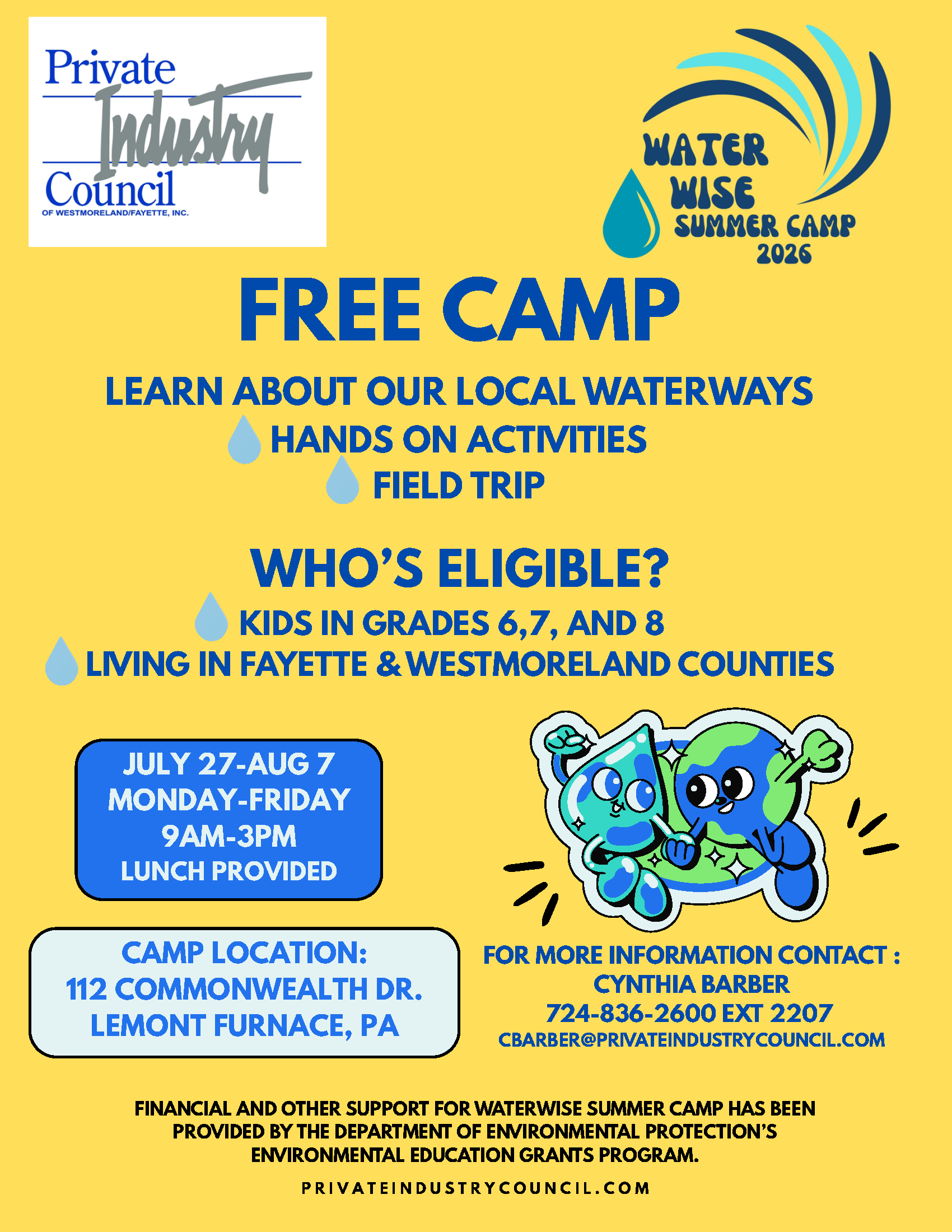

Financial and other support for the WaterWise Summer Camp has been provided by the Department of Environmental Protection’s Environmental Education Grants Program.