3rd – 5th grade students from Monessen Elementary recently explored how different towers around the world were built during the Private Industry Council’s After-School Program! They also learned about different professionals in the engineering industry such as Architects and Engineers. The previous day, we began with a STEM challenge using only plain copy paper and tape to create a weightbearing tower; this was quite a challenge! The next day, students worked in groups to build a more sophisticated version of their paper towers. The students were able to go through the entire engineering design process—ask/identify the need, research the problem, imagine possible solutions, plan a solution, create a prototype, test/evaluate the prototype, and improve and redesign their prototype as needed. Just like real engineers do every day!
First, students agreed that the tower needed to be sturdy and balanced! We explored different towers that were built around the world to grow their background knowledge and research how others solved this problem. They studied the Eiffel tower, the Leaning Tower of Pisa, and a few different medieval castle towers, discussing what made these towers sturdy and able to hold weight. Next, they imagined different towers that would meet the challenge and created a plan in small groups by drawing a model of their imagined creations. Applying their background knowledge and ideas, they implemented their plans and tested their paper tower prototypes. It was a definite feat! Many students had to rethink their designs more than once so they could stand and hold weight. We used this experience as a moment to practice their Social-Emotional Learning skills!
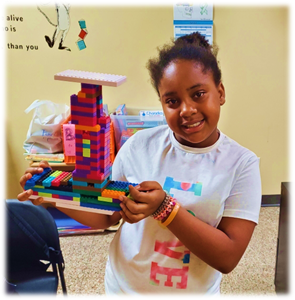
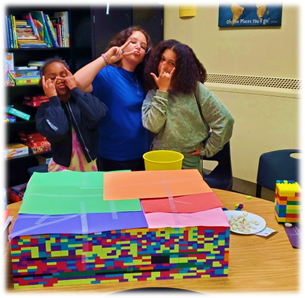
The next day, we watched a real-life architect, engineer, and Lego brick artist use Legos for a design challenge: build the Eiffel Tower! Students saw these professionals solve a similar problem and face the same challenges, all while using the same materials they will use to perfect their prototypes! Pictured above are some of towers made by the students using the engineering design process.
The students were extremely proud of their planning and hard work, and so were we! It was amazing to see the different approaches students explored to solve the same problem. The goal was to strengthen their engineering and problem-solving skills and inspire more young learners to become engineers in the workforce!


 724-836-2600